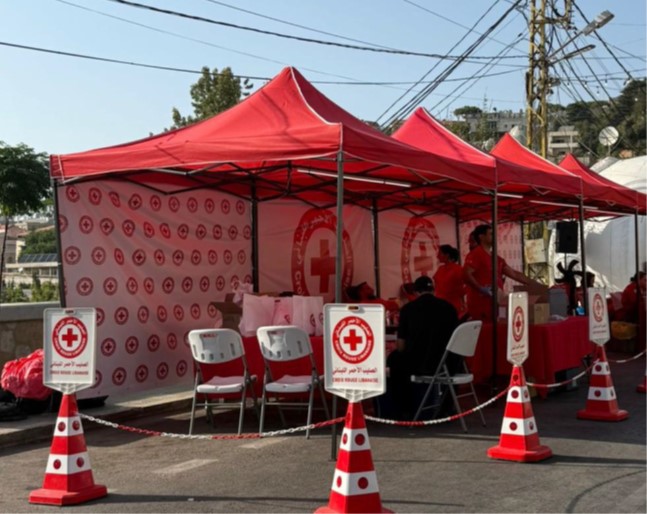
Since July 2025, the Austrian Red Cross (AutRC) along with Lebanese Red Cross (LRC) are working together – in a unique business partnership with Kedrion Biopharma and with funding from the Austrian Development Agency (ADA) as part of International Partnerships Austria – to implement the 3-years’ project “Pioneering Lebanon’s Approach to Sustainable Blood Management” (PLASMA), with the goal to ensure safe and sustainable access to blood products in Lebanon, reducing long-term dependence on international aid.
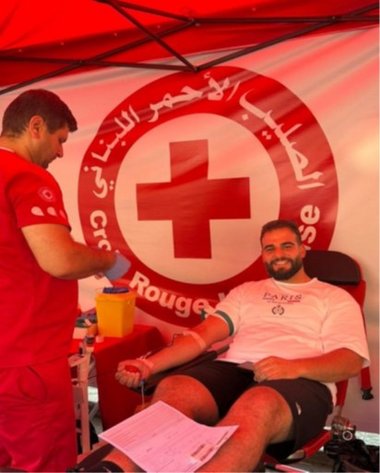
LRC Blood Transfusion Services (BTS) started in 1964, with the first blood bank being established in Beirut. Since then, LRC's BTS experienced significant growth, with a total of 13 LRC BTS collection centres across Lebanon, as well as a central BTS centre. Today LRC – mandated by the Lebanese Ministry of Public Health (MoPH) – provides all health institutions with safe blood for patients in need, regardless of nationality, religion, race, ethnicity, gender identity, sexual orientation or social status. LRC has become the main blood transfusion actor in Lebanon, providing more than 40% of the demand for blood products in Lebanon.
Within this business partnership project, Kedrion Biopharma leverages advanced technology, state-of-the-art infrastructure, and a skilled workforce to ensure the safe and efficient transport of blood products. Kedrion’s extensive network, commitment to quality and compliance, and community-centric approach enable them to provide reliable, timely services and support public health initiatives. Austrian Red Cross on the other hand, brings longstanding experience in high-standard blood transfusion services, cost recovery models for sustainability, and international partnerships in the blood sector.
Under the current project, the goal is to initiate a business partnership between Kedrion and LRC to develop the plasma market in Lebanon and supply of plasma from Lebanon. Moreover, to create income sources for LRC that are needed to sustain its blood services, ultimately saving thousands of lives each year in meeting the blood demand of the Lebanese population. The project has the following components:
- Establishing quality management and assurance (Component 1) to ensure the blood product (human plasma for fractionation) produced is compliant with national and international quality standards and acquire the necessary accreditations.
- Investing in centralised and improved BTS (Component 2) to increase the production capacity and Nucleic Acid Testing (NAT) possibilities.
- Operationalizing a cost recovery business model (Component 3) based on plasma production, facilitating access to the national and international market.
The project’s first half year of implementation (preparatory phase) has progressed due to technical and financial support from LRC partners – specifically Austrian Red Cross and Kedrion, who are actively engaged with LRC to assess quality procedures and identify investment needs for adapting existing services to produce human plasma for fractionation that can be used for plasma-derived medicinal products. This collaboration has facilitated access to specialized technical expertise, accredited systems, and structured guidance necessary to meet the quality and regulatory requirements. In parallel, LRC-BTS has continued to strengthen its institutional capacity by enhancing its quality management systems, aligning procedures with European standards, and initiating the investments required to meet these standards.
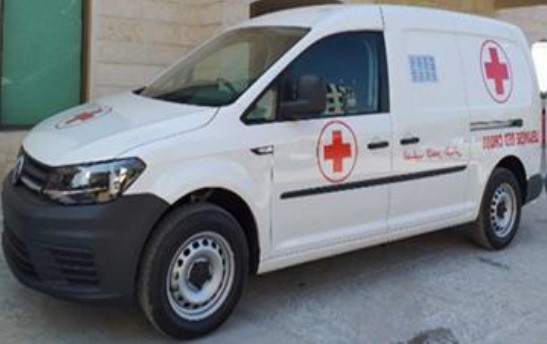
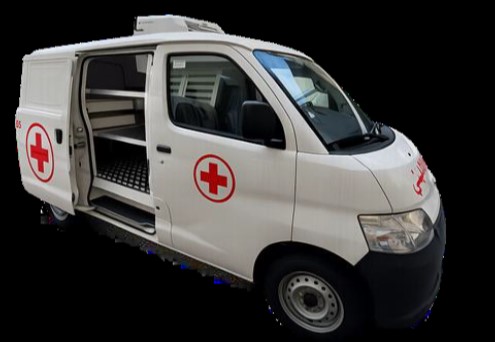
Regarding the centralization component, all necessary procurement (transportation boxes, vehicles etc.) has been done, and the site for the new freezer room has been identified for construction. Supplier evaluation has been completed across the full reagent (and sensitive equipment) supply chain, including site visits to all suppliers. Logistics procedures have been defined to accommodate all centres, as full traceability is required for all equipment and assigned personnel. Blood bank software is customized and already installed in one production centre. Additional required technical staff is being recruited and qualified where training services will be delivered for existing and new staff to ensure all relevant staff are equipped with the skills required for the new human plasma production component. LRC is currently assessing blood donation centres and mobile blood drive operations to enhance accessibility for persons with disabilities, taking into account both feasible infrastructure and medical eligibility criteria as defined by national regulations. And in view of the third component, agreements with accredited external laboratories have been concluded, to secure quality of testing results and to be compliant with European guidelines.
The next implementation steps include installing the new freezer room with the shock-freezer, completing the validation of transportation vehicles, starting centralized production, and completing staff recruitment and training (including on topics such as protection, gender and inclusion). Kedrion will conduct an on-site audit to ensure the successful execution of the plan and compliance with quality standards, such as the good manufacturing practices (EU-GMP). At the same time, EU certification for plasma export will have to be initiated with relevant national EU authorities (such as the Austrian Agency for Health and Food Safety GmbH, AGES).