Over the past six months, the Middle East has experienced one of the most severe regional crises in recent years. Since 28 February, the crisis in Iran has escalated into a nationwide complex emergency, driven by sustained military strikes. Prior to the escalation of hostilities, Iran was already facing significant underlying vulnerabilities, including prolonged economic fragility linked to sanctions and high inflation. These conditions, combined with chronic water scarcity, environmental stress, and a strained health system with limited access to essential medicines and equipment, had weakened coping capacities across the people living in Iran. What began as a bilateral escalation passed over into a regional conflict with far-reaching humanitarian, economic, and political consequences.
The escalation had a devastating impact on Iran. Airstrikes and military operations resulted in more than 3,500 fatalities and more than 34,000 injuries. An estimated 3.2 million people were displaced within the country as attacks damaged homes, public infrastructure and essential services. The conflict has further compounded Iran’s already severe economic challenges. More than one million people are estimated to have lost their jobs due to the escalation. According to World Bank estimates, an additional two million people are expected to fall below the poverty line as a direct consequence of the conflict. For many families, the combination of displacement, unemployment and rapidly rising living costs has created an acute humanitarian crisis.
Beyond Iran, the conflict has had devastating effects across the region.
- In Lebanon more than 1 million people were displaced multiple times and more than 3.600 killed.
- In Israel, missile attacks and falling debris caused casualties and damage nationwide, while communities across the country faced repeated security alerts and disruptions.
- The humanitarian situation in the Palestinian territories has deteriorated further. During the escalation, severe restrictions on humanitarian access, repeated interruptions to aid delivery, and severe shortages of essential goods intensified the suffering of civilians.
The conflict increasingly expanded beyond its initial geographic scope, with more than four million people displaced across the whole region. The consequences of the crisis extended far beyond the Middle East. The disruption of shipping routes through the Strait of Hormuz and restrictions on air traffic significantly affected global supply chains. Transport costs and fuel prices rose dramatically. Also increasing the cost of fertilizer, which threatens agricultural production and food security in many other countries outside the region. These developments are expected to worsen hunger and poverty into 2027, especially in regions already facing crises.
The RCRC Movement addressed the crisis with a large-scale humanitarian response. More than 150,000 staff and volunteers are supporting affected communities across the region. Tragically, six Red Cross and Red Crescent personnel and volunteers have been killed and sixteen injured while carrying out their humanitarian duties.
The IFRC launched an Emergency Appeal for Iran over CHF 40 million and revised its Lebanon Appeal to CHF 80 million. Additionally, imminent DREF operations in Azerbaijan, Armenia, Iraq, Afghanistan and Pakistan supported the National Societies in preparing for potential regional impacts of the conflict.
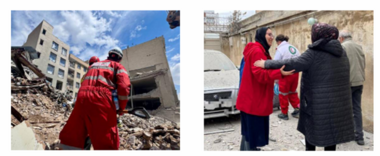
The Iranian Red Crescent Society (IRCS) focused on search and rescue services at the beginning and continues to provide primary healthcare, mental health, and psychosocial support through hotlines, relief assistance, shelter support, water and sanitation services, and family reunification activities.
While a ceasefire between the United States and Iran was signed in mid-June and brought a temporary reduction in hostilities, the agreement remains fragile and has repeatedly come under threat from renewed incidents and regional tensions, with humanitarian needs persisting.
IN-DEPTH: LEBANON - CONFLICT ESCALATION & RESPONSE
Lebanon is facing a severe humanitarian emergency following renewed escalation that began on 2 March 2026. Airstrikes and shelling affected multiple areas in South and East Lebanon, including Beirut’s southern suburbs. Evacuation orders triggered mass displacement and severe traffic congestion as families fled to safer areas. According to official national figures, hundreds of hostilities incidents were recorded, causing more than deaths (over 4,200 individuals killed), injuries (over 12,000 individuals injured), large-scale displacement (over one million displaced), and major pressure on shelters, health services, and emergency response capacity. Despite the ceasefire, attacks continue especially ii the South of Lebanon, and the situation remains very dynamic and difficult to predict.
The Lebanese Red Cross (LRC) is on the frontlines, delivering urgent lifesaving services through its volunteers, staff and operational teams across Lebanon. Emergency teams of the ambulance response and search & rescue are operating on the frontline and supporting evacuations under very difficult conditions; two volunteers have been killed on duty while trying to evacuate injured civilians in the South. More info: Lebanon War Response - Lebanese Red Cross
With crisis modifier funding from the Austrian Development Agency (ADA), the Lebanese Red Cross has been supporting internally displaced people residing in collective shelters across Lebanon through WASH rehabilitation and shelter improvement works. The Lebanese Red Cross is managing the Camille Chamoun Sports City collective shelter, which hosts the largest number of internally displaced people in the country, with a capacity of 2,500 individuals. Through the crisis modifier funding, LRC has been able to provide portable toilet facilities, rehabilitate existing WASH facilities, and implement essential shelter works in 21 collective shelters. These interventions form part of the broader response to displacement in Lebanon, where 645 collective shelters are hosting more than 134,000 internally displaced people out of an estimated one million people displaced across the country.
The AutRC Middle East team launched a LinkedIn channel, to present different topics, ranging from project updates and new approaches to the importance of respecting the International Humanitarian Law in these crucial times for the region:
Austrian Red Cross - Middle East | LinkedIn